Many overseas clients ask us, “Which machine has the highest output?” when inquiring about aluminum foil container production lines. Few, however, calculate plant space, power consumption, raw‑material costs, and payback period in advance. Rushing into purchasing equipment often leads to problems such as insufficient factory space, unmet expected output, and heavy capital pressure.
Below are two real‑world reference cases for 63‑ton and 80‑ton aluminum foil container production lines. We cover output, investment, floor space, and payback period for your project evaluation.
Note: The figures below are for reference only. Local electricity tariffs, labor costs, and raw‑material prices will affect actual results. Final solutions shall be customized according to local market conditions.
| Item | 63-ton production line | 80-ton production line |
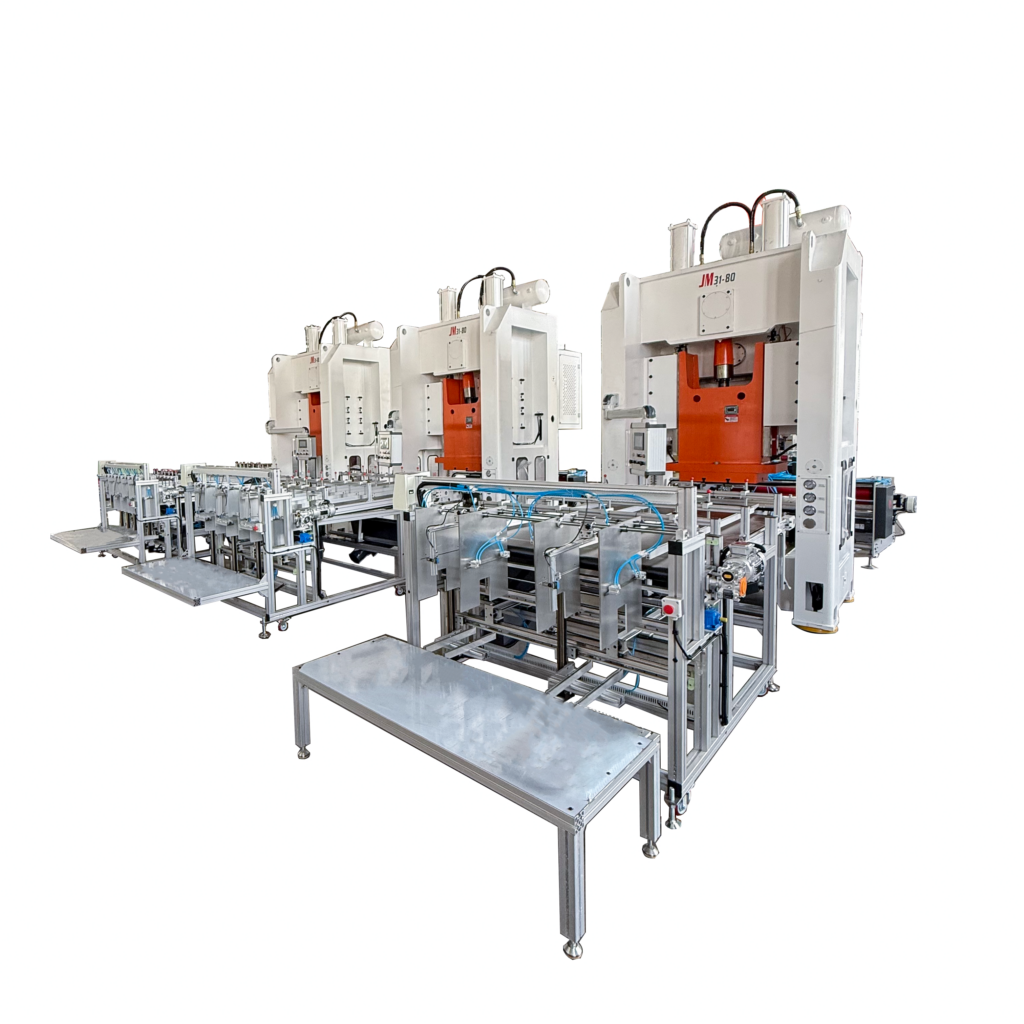
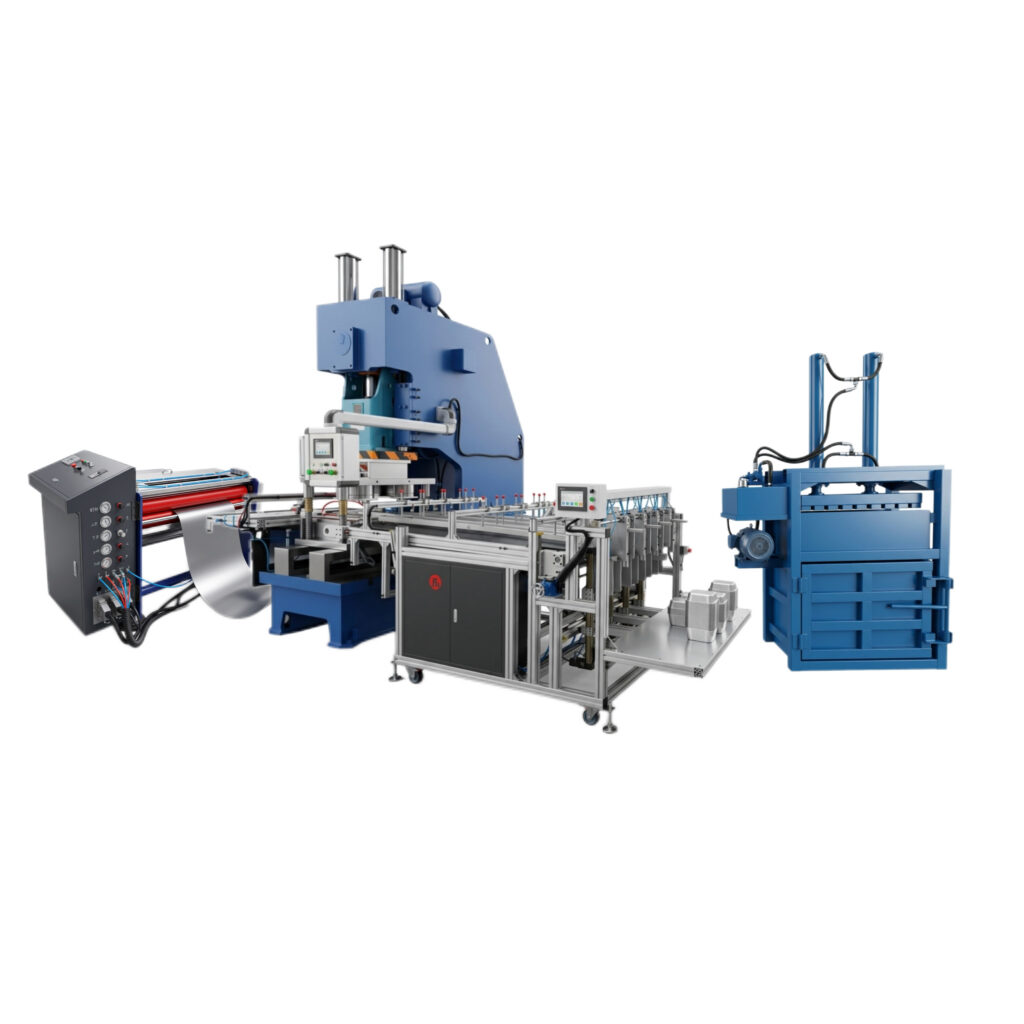
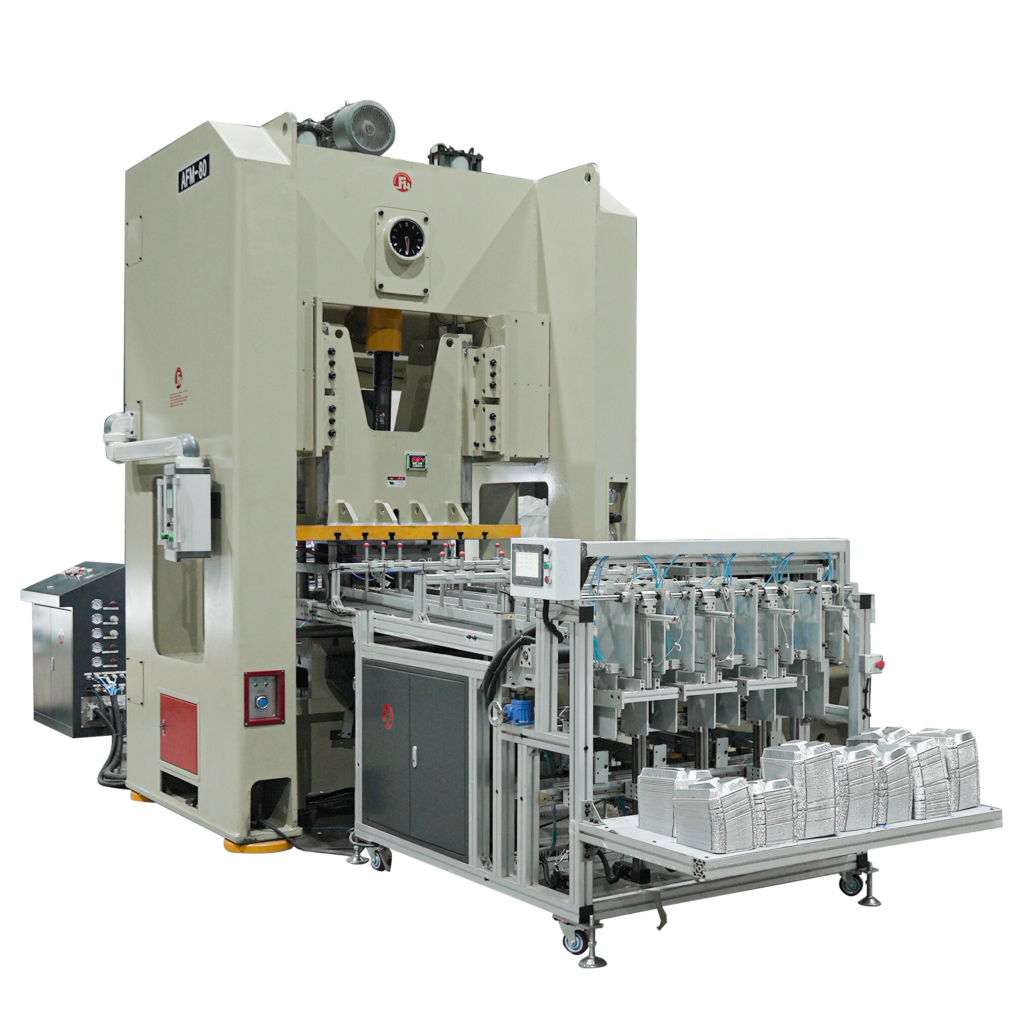
| Main Equipment | 63-ton stamping press +automatic feeder + scraprecovery system | 80-ton stamping press + servofeeder + scrap recovery system |
| Theoretical daily output(10-hour working shift) | Approx. 180,000containers (standard250-750ml) | Approx. 260,000 containers(supports large-size containers) |
| Recommended factory area | ≥320 ㎡ | ≥450㎡ |
| Required operators per shift | 2-3 persons | 3-4 persons |
| Reference total investment | Mid-range budget, ideal for startup factories | Mid-high budget, for factories withexisting orders |
| Best-fit clients | New entrants,small-batch local distribution orders | Factories with stable export orders,multi-spec production for large contracts |
Case Analysis
Case 1: 63‑ton Aluminum Foil Container Line (Eastern European Client)
This Eastern European client was previously engaged in packaging trading and was building their first factory with small‑batch, multi‑spec local orders.
Instead of pushing high‑capacity machines, we conducted a full‑scope evaluation first:
1. Factory space: The client owned a spare 350㎡ workshop, which perfectly fits the 63‑ton line, including raw‑material storage and finished‑goods warehousing.
2. Production capacity: 180,000 pieces per day matched their existing order volume, preventing idle equipment.
3. Payback estimation: Based on local selling prices, aluminum foil scrap loss, labor and electricity costs, the estimated payback period is 14‑18 months under full‑load operation.
The client selected this line, avoiding huge upfront capital outlay and lowering startup risks.
Case 2: 80‑ton Aluminum Foil Container Line (American Client)
This American client already ran a packaging plant with steady supermarket orders. They needed to produce both small and large‑capacity aluminum foil containers.
The 63‑ton press cannot handle large‑size container stamping, so we recommended the 80‑ton line.
– Higher floor‑space requirement; the client needed to renovate their workshop to 480㎡.
– Significantly higher output to fulfill large‑volume export contracts.
– Payback period: Around 12‑16 months with stable full‑load production.
Risk reminder: If order volume is insufficient, the 80‑ton line carries higher fixed power consumption and depreciation costs. The payback period may extend to over 20 months. It is not suitable for new investors without solid order backing.
Key Investment Tips
1. Select equipment according to your order portfolio. Higher tonnage does not always mean better value. Idle large‑scale equipment is the biggest waste of capital.
2. When planning factory space, reserve areas for mother‑roll storage, finished‑goods warehouse, and maintenance access, not only the footprint of machines.
3. Include aluminum foil scrap loss, electricity, labor, and mold‑changing costs in your budget. Many investors overlook these items and end up with budget overruns.
We provide a customized assessment of output, capital input, and return based on your target market, order mix, and workshop conditions. We will offer production‑line solutions tailored to your actual demand and will not sell equipment beyond your real requirement